A modern wood stove is far more sophisticated than most owners realize. Understanding why it has a sweet spot — and why it's so easy to fall out of it — is the whole story.
The best stoves are built around secondary combustion — where the smoke inside the firebox, holding 30 to 70 percent of your wood's potential energy, actually ignites and burns.
But that only happens above a critical firebox temperature — roughly 1,100 to 1,300°F. Below it, the smoke passes through unburned and carries its energy up the chimney. Above it, the stove transforms: efficiency jumps, the fire burns clean.
Run the fan too aggressively and you can drive the firebox below that threshold in under a minute — we've watched it happen. Smoke stops burning, creosote begins to deposit, and no matter how much wood you add, you're fighting a losing battle.
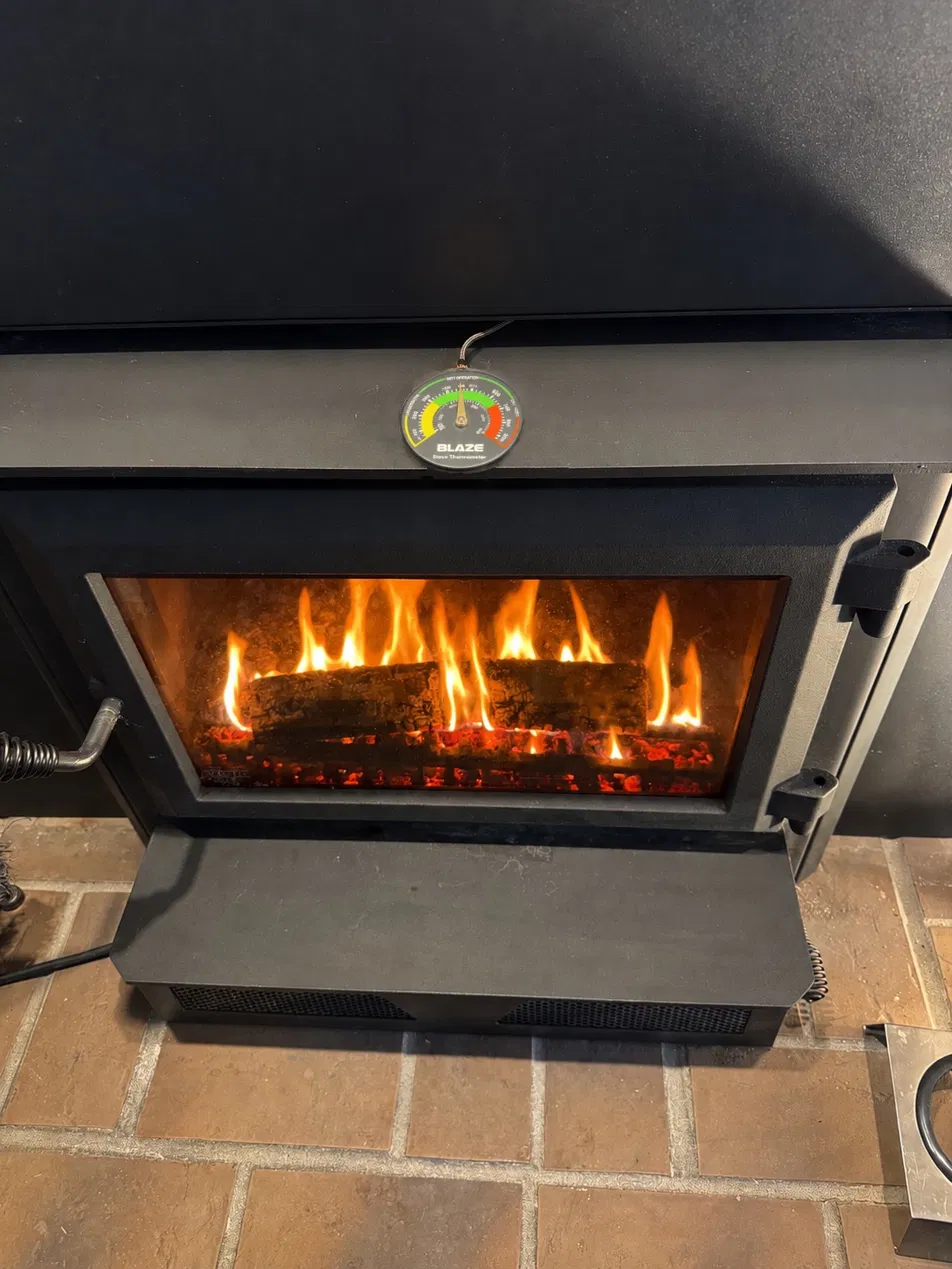
Above ~1,100°F the smoke itself ignites
stoveLogic sits between your wall outlet and your existing fan — that's the entire installation. Nothing about your stove is modified, altered, or added to. It simply takes over the speed control you were managing by hand, or not at all.
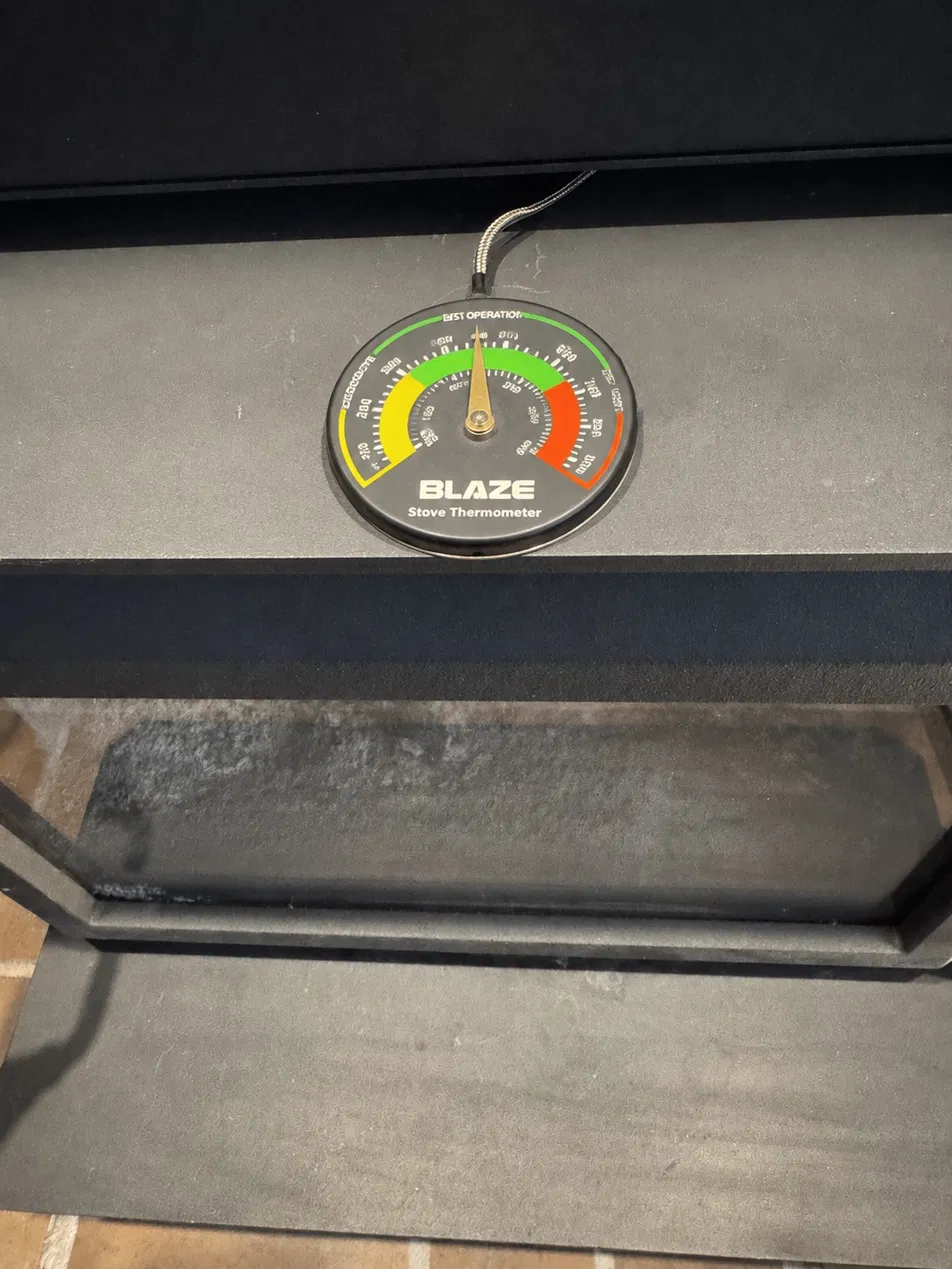
Sensor mounts in the magnetic thermometer you already use · final product may differ from photograph
The sensor mounts inside the same magnetic thermometer most stoves already wear — that familiar analog dial. stoveLogic adds a thermocouple at its center and, for the first time, gives you precise, real-time firebox temperature the device uses to make intelligent decisions about your fan.
Unplug your fan from the wall.
Plug your fan into stoveLogic.
Plug stoveLogic into the wall.
Stick the sensor where your old thermometer was.
A one-time calibration — performed the first time your stove reaches operating temperature — teaches stoveLogic the specific characteristics of your stove, tuning readings and fan response precisely to your setup. After that, it's completely automatic.
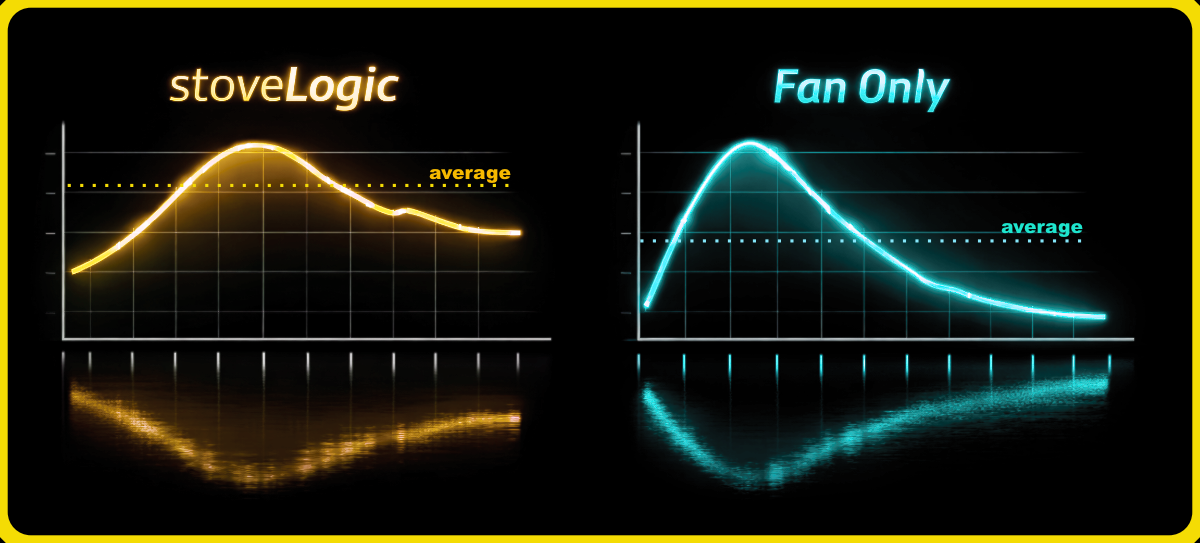
The difference isn't subtle. Against a fan running flat-out, stoveLogic keeps the firebox in the combustion window and delivers a dramatically higher average heat output over a burn.
Front panel, rear panel, the sensor, and every control walked through in detail.